
You want to find the better display for your needs, but choosing between TFT and LCD can feel confusing. You see both options everywhere, from phones to monitors. Each type offers unique strengths in image quality, speed, and price. You deserve clear answers so you can make the right choice. This guide will help you understand what sets these displays apart.
Key Takeaways
-
TFT displays offer sharper images and vibrant colors, making them ideal for gaming and media consumption.
-
LCD displays are more affordable and widely available, making them a practical choice for everyday tasks.
-
Consider refresh rates and response times when choosing a display; TFT excels in fast-paced applications.
-
Evaluate your needs: choose TFT for high-quality visuals and LCD for budget-friendly solutions.
-
Both display types have unique strengths; weigh image quality, cost, and intended use before deciding.
LCD Display Overview
What is an LCD Display?
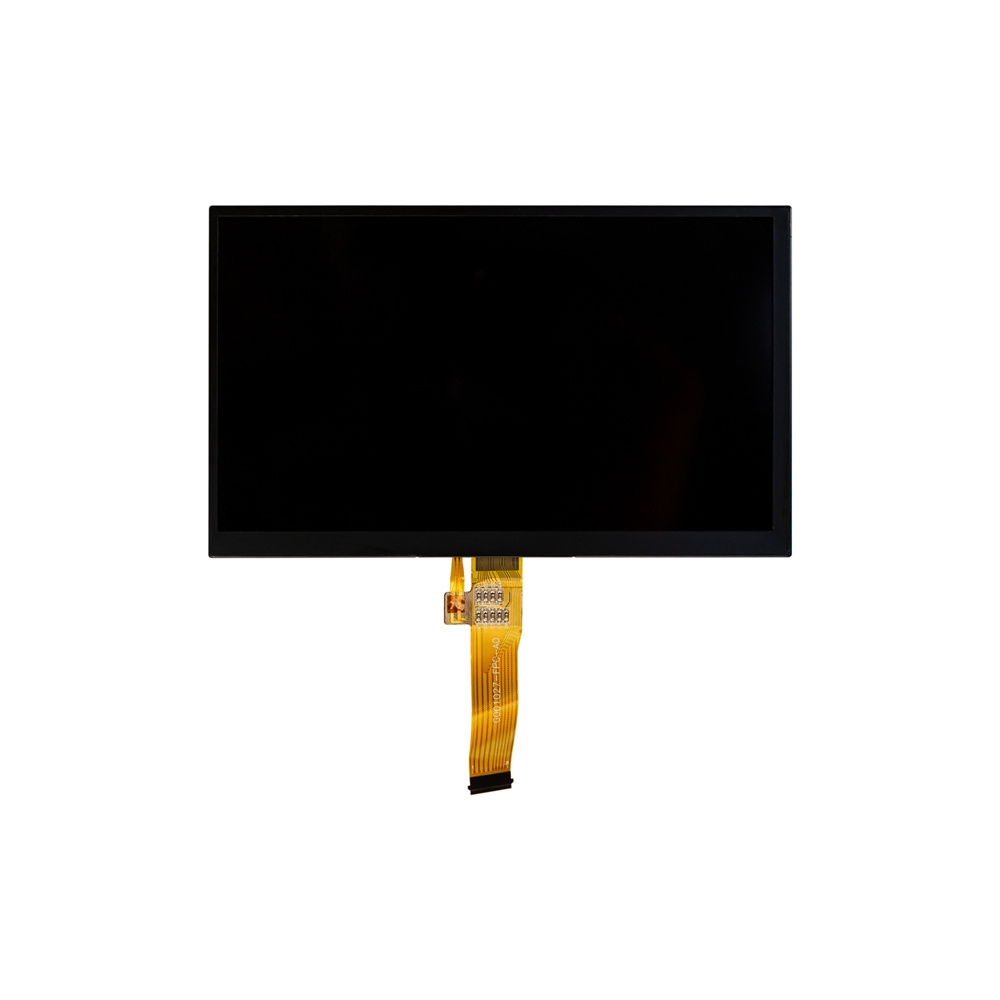
You see lcd screens everywhere, from your phone to your TV. An lcd display stands for liquid crystal display. This technology uses a special material called liquid crystals to create images. When you look at lcd screens, you notice they are thin, lightweight, and energy-efficient. These features make lcd a popular choice for many devices.
How LCD Displays Work
An lcd display uses several layers to produce clear images. Here’s how the core technology works:
-
Backlight: Provides the light source, usually with LEDs.
-
Polarizing Filters: Control how light passes through the screen.
-
Glass Substrates: Give structure and support to the display.
-
Transparent Electrodes: Apply voltage to the liquid crystals.
-
Liquid Crystal Layer: Changes the alignment of crystals to control light.
-
Color Filters: Add red, green, and blue colors to each pixel.
You get sharp images because the liquid crystals twist and untwist when voltage passes through them. This process lets the right amount of light and color reach your eyes.
Tip: LCD screens do not produce their own light. They need a backlight to make the display visible.
Common Uses
You interact with lcd screens in many parts of your daily life. Manufacturers use lcd display technology in a wide range of products:
-
Consumer electronics: TVs, computer monitors, smartphones, and tablets.
-
Digital signage: Advertising displays and menu boards.
-
Home appliances: Microwaves, refrigerators, and washing machines.
-
Automotive: Dashboard screens and infotainment systems.
-
Medical equipment: Diagnostic devices and patient monitors.
-
Industrial settings: Control panels and instrumentation displays.
-
Education: Interactive whiteboards and projectors.
-
Gaming: Game consoles and handheld devices.
-
Portable devices: E-readers.
-
Wearable tech: Smartwatches and fitness trackers.
You also find lcd screens in rugged environments, such as transportation systems, manufacturing plants, and outdoor kiosks. These displays offer durability and reliable performance, even in tough conditions.
TFT Display Overview
What is a TFT Display?
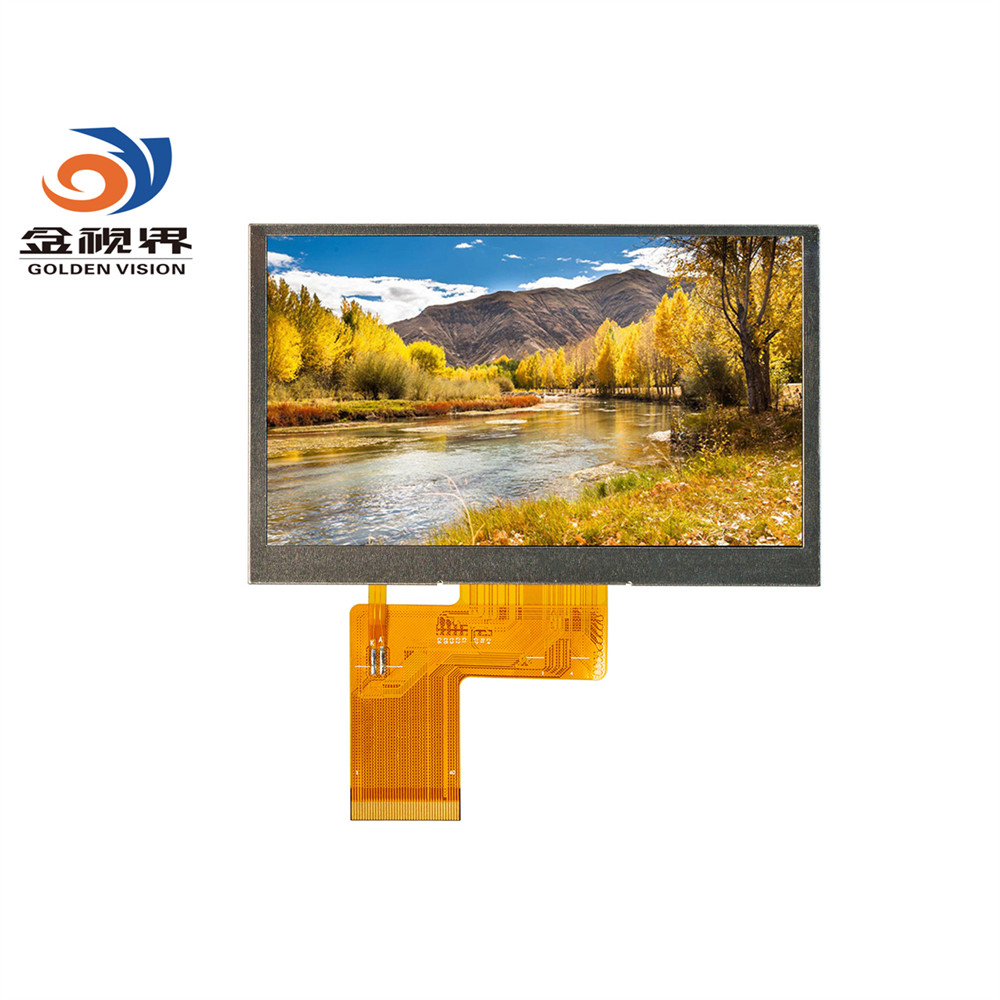
You may have heard the term tft when shopping for screens. TFT stands for thin film transistor. This technology is a type of active-matrix display. Each pixel on a tft display uses its own tiny transistor. These transistors control the brightness and color of each pixel with high accuracy. You get sharper images and more vibrant colors compared to standard LCD screens.
Note: Every tft display is technically a kind of LCD, but not all LCDs use tft technology.
How TFT Displays Work
A tft screen uses a grid of thin film transistor elements. Each pixel connects to its own transistor and capacitor. When you send a signal to the display, the transistors switch on and off quickly. This process lets you see fast-moving images without blur. The active-matrix design means you get better control over each pixel. You notice smoother video playback and more precise color changes.
Here’s a quick comparison between tft and standard LCD displays:
|
Feature |
TFT Displays |
LCD Displays |
|---|---|---|
|
Image Quality |
Higher contrast ratios, more vibrant colors |
Generally lower image quality |
|
Refresh Rate |
Typically higher, allowing for smoother images |
Lower refresh rates |
|
Power Consumption |
Requires more power, leading to shorter battery life |
Generally more power-efficient |
|
Cost |
More expensive, less common in budget devices |
Less expensive, widely used |
Typical Applications
You find tft screens in many devices that need high-quality visuals. Smartphones, tablets, and gaming monitors often use tft technology. Car dashboards and infotainment systems rely on tft for clear graphics. Medical equipment and industrial machines also use tft displays for accurate data.
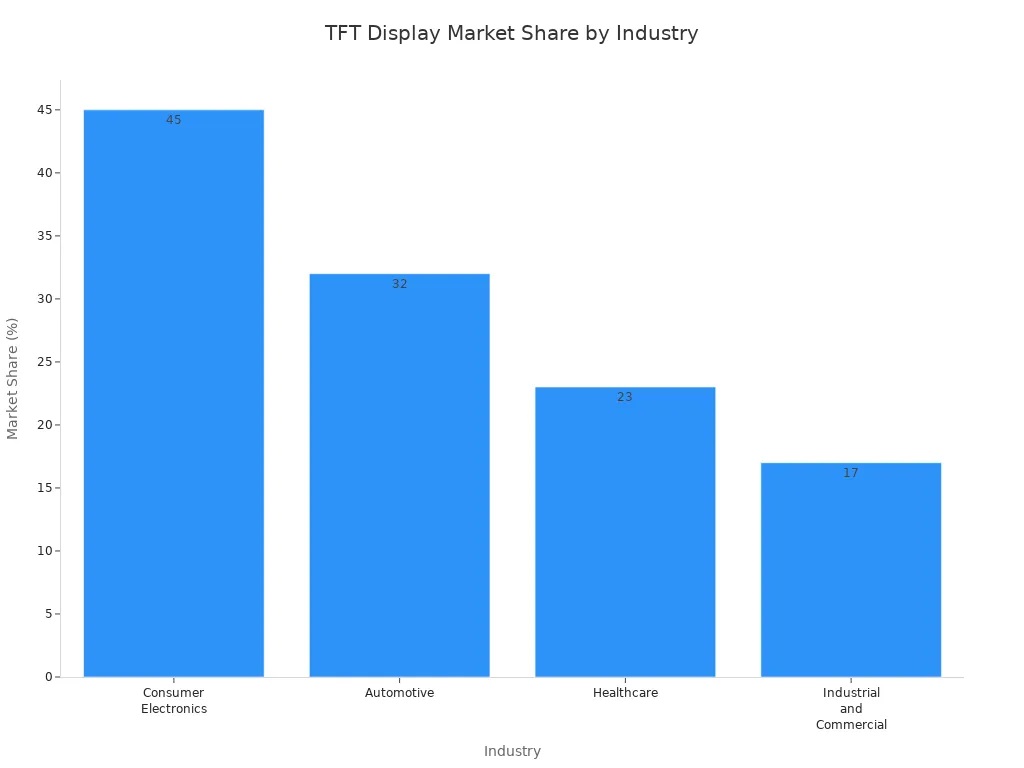
The main industries using tft displays in 2024 include:
|
Industry |
Market Share (%) |
Market Value (USD) |
|---|---|---|
|
Consumer Electronics |
45% |
20.6 billion |
|
Automotive |
32% |
14.6 billion |
|
Healthcare |
23% |
10.5 billion |
|
Industrial and Commercial |
17% |
7.8 billion |
You see tft technology wherever you need fast response, bright colors, and sharp images.
TFT vs LCD Differences
Image Quality
You notice a clear difference in image quality when you compare tft vs lcd displays. TFT screens deliver sharp images and vibrant colors, making them ideal for tasks that demand high visual clarity. Standard lcd displays often struggle with lower contrast ratios and less accurate color reproduction. If you want higher contrast ratios and better color accuracy, tft displays stand out as the better display for most visual applications.
|
Feature |
TFT Displays |
Standard LCD Displays |
|---|---|---|
|
Contrast Ratios |
Higher contrast ratios |
Limited |
|
Color Accuracy |
Better |
Adequate |
|
Image Rendering |
Sharp images |
Less suitable for rich graphics |
You see tft screens used in devices where quality matters, such as gaming monitors and medical equipment. LCD screens work well for basic tasks but lack the vibrant colors and sharp images you get from tft technology.
Refresh Rate
Refresh rate affects how smooth motion appears on your screen. TFT displays offer a wide range of refresh rates, from 60Hz up to 144Hz. You experience smooth performance with no lag or stutter, especially during gaming or watching fast-paced videos. Standard lcd displays usually provide refresh rates between 30Hz and 60Hz, which can result in inconsistent performance.
|
Display Type |
Refresh Rate Range |
Performance Notes |
|---|---|---|
|
TFT |
60Hz - 144Hz |
Smooth performance for gaming, no lag or stutter. |
|
Graphic LCD |
30Hz - 60Hz |
Inconsistent performance, not suitable for fast-paced games. |
If you play games or use applications that require quick response, tft displays give you a clear advantage.
Color Reproduction
Color reproduction determines how accurately your screen displays colors. TFT screens excel in this area, providing vibrant colors and consistent quality across the display. You see rich reds, greens, and blues, which makes tft vs lcd a clear choice for graphic design and media consumption. LCD screens offer adequate color reproduction but often lack the depth and vibrancy found in tft displays.
Note: You get more realistic images and better display quality with tft screens, especially when viewing photos or videos.
Viewing Angles
Viewing angles describe how well you can see the screen from different positions. TFT displays generally offer wider viewing angles than older lcd panels, such as TN types. You notice less color distortion and better clarity when you look at the screen from the side. IPS panels, a type of lcd, provide excellent viewing from all directions, while tft lcds perform well but may not match IPS or AMOLED screens.
|
Panel Type |
Viewing Angle Characteristics |
|---|---|
|
TFT LCD |
Generally better with wide viewing angles compared to older TN types. |
|
TN Panels |
Cheaper but poor viewing angles from the side. |
|
IPS |
Excellent viewing from all directions. |
|
AMOLED |
Perfect viewing from all directions but more expensive. |
If you need a screen that looks good from multiple angles, tft displays offer a solid balance between price and quality.
Power Consumption
You care about battery life, especially in portable devices. TFT screens have traditionally been more energy-efficient than IPS panels. This lower power consumption made tft displays popular in smartphones and tablets. Recent improvements in lcd technology have narrowed the gap, but tft still holds an advantage for devices where battery life is critical.
-
TFT displays use less power than IPS panels.
-
You find tft screens in portable devices because they help extend battery life.
-
New lcd panels have improved energy efficiency, but tft remains a strong choice.
Cost
Cost plays a big role in your decision. TFT displays cost more than standard lcd screens because they offer better display quality and performance. LCD screens remain the most cost-effective option for basic tasks and budget devices. If you want vibrant colors, higher contrast ratios, and sharp images, you pay a premium for tft technology.
Tip: Choose lcd displays if you need a budget-friendly solution. Pick tft screens when you want superior visuals and performance.
Outdoor Visibility
Outdoor visibility matters when you use devices in bright sunlight. High-brightness tft lcd displays often exceed 1,000 nits, helping you see the screen clearly even outdoors. Effective contrast and low reflectance surfaces improve visibility by reducing glare. Optical bonding enhances light transmission and reduces reflections, making tft displays a better display for outdoor use.
|
Factor |
Description |
|---|---|
|
Brightness |
High-brightness tft lcd displays often exceed 1,000 nits to combat sunlight interference. |
|
Contrast |
Effective contrast is crucial; high brightness alone is insufficient without proper contrast. |
|
Surface Reflection |
Low reflectance surfaces help maintain visibility by reducing glare from direct sunlight. |
|
Optical Efficiency |
Optical bonding enhances visibility by improving light transmission and reducing reflections. |
Lifespan and Environmental Impact
You want your display to last. TFT displays typically offer a lifespan of 30,000 to 60,000 hours. LED backlights can last over 50,000 hours, while fluorescent backlights last about 20,000 to 30,000 hours. Manufacturing both tft and lcd displays generates waste and uses hazardous substances, but recycling and reuse can help reduce environmental impact.
-
TFT displays last longer than many standard lcd screens.
-
Both tft and lcd manufacturing processes affect the environment.
-
Recycling materials can help mitigate some negative effects.
Response Time
Response time measures how quickly pixels change. TFT lcd displays offer response times between 1 and 5 milliseconds, making them ideal for gaming, medical, and industrial applications. Standard lcd screens often have slower response times, which can cause motion blur.
|
Display Type |
Response Time (ms) |
Application Importance |
|---|---|---|
|
TFT LCD |
1 - 5 |
Gaming, Medical, Industrial |
|
AMOLED |
< 1 |
Gaming, High-speed visuals |
You get sharp images and smooth motion with tft screens, especially when you need fast-moving visuals.
Summary
When you compare tft vs lcd, you see that tft displays deliver higher contrast ratios, vibrant colors, sharp images, and faster performance. LCD screens offer cost-effective solutions and adequate quality for basic tasks. If you want the better display for visuals, gaming, or outdoor use, tft stands out. If you need a practical, budget-friendly option, lcd displays meet your needs.
Better Display: Pros and Cons
TFT Display Pros
You see many advantages when you choose a tft display for high-performance tasks. The better display often stands out because of its brightness and clarity. You get sharp images and vibrant colors, which help you enjoy movies, games, and graphics. The thin and lightweight design makes it easy to use in portable devices. Energy efficiency improves battery life in smartphones and tablets.
|
Advantage |
Description |
|---|---|
|
High Brightness and Contrast Ratios |
You experience clear visuals, even in bright environments. |
|
Energy Efficiency |
You use less power compared to older screens, which helps your device last longer. |
|
Thin, Lightweight, and Flexible Designs |
You benefit from easy integration into portable devices and flexible screen options. |
Tip: If you want the better display for gaming or graphic design, tft gives you a strong advantage.
TFT Display Cons
You also face some drawbacks with tft. Limited viewing angles can make colors shift when you look from the side. Higher energy consumption sometimes reduces battery life compared to other lcd types. Achieving true black levels proves difficult, which affects image depth. Some users report that tft screens struggle in extreme temperatures, especially in outdoor settings.
-
Limited viewing angles
-
Higher energy consumption
-
Challenges with true black levels
-
Risk of thermal stress in harsh environments
LCD Display Pros
You benefit from lcd displays when you need a practical and affordable solution. The better display for budget-conscious users often comes from lcd technology. You find lcd screens in many devices because they cost less to produce. Mature manufacturing processes make lcd panels reliable and easy to replace. You enjoy consistent performance for everyday tasks.
-
Affordable for most consumers
-
Widely available in many devices
-
Reliable for basic tasks
-
Easy to manufacture and replace
Note: If you want the better display for simple use and low cost, lcd meets your needs.
LCD Display Cons
You notice some disadvantages with lcd screens. Lower image quality and limited color reproduction can affect your viewing experience. The backlight sometimes fails before the lcd matrix, which leads to repairs. Contrast may drift after long use, especially in high temperatures. Some lcd screens miss data writes if you do not use proper resistors.
-
Lower image quality and color depth
-
Backlight failure before lcd matrix
-
Contrast drift after extended use
-
Occasional data write issues
You weigh these pros and cons to decide which is the better display for your needs. If you value visuals and performance, tft stands out. If you want practicality and affordability, lcd offers a strong choice.
Choosing Your Display
Best Use Cases for TFT
You should consider TFT displays when you want fast performance and sharp visuals. Many users choose TFT for gaming and entertainment because these screens deliver quick response times and vibrant colors. If you play fast-paced games, you will notice smoother action and less motion blur. TFT displays also work well for entertainment like watching movies or streaming videos, where image quality matters.
You can use TFT screens in these situations:
-
Gaming monitors for competitive gaming and entertainment
-
Everyday devices like affordable smartphones and laptops
-
Office work and web browsing
-
Portable devices where battery life and display clarity are important
Tip: Gamers often pick TFT displays for their fast refresh rates and clear images, which improve the gaming experience.
Best Use Cases for LCD
LCD displays fit best when you need a reliable and cost-effective solution. Many industries use LCD screens in equipment that must last a long time. You see LCDs in medical devices, industrial machines, and transportation dashboards. These displays also appear in electric meters and security systems, where durability and low maintenance matter more than high-end visuals.
You benefit from LCD displays in these areas:
-
Industrial equipment and control panels
-
Medical monitoring devices
-
Transportation dashboards and electric meters
-
Security systems for homes and businesses
LCD screens offer lower initial costs and reduced maintenance. They also last longer than some other display types, making them a smart choice for practical applications.
Key Factors for Decision
You need to weigh several factors before choosing between TFT and LCD. Your budget, the main use case, and the features you want all play a role. If you care most about gaming and entertainment, focus on response time, refresh rate, and color quality. For work or industrial use, reliability and cost may matter more.
|
User Priority |
Influence on Choice |
|---|---|
|
Image Quality |
70% of consumers prioritize image quality |
|
Refresh Rate |
Critical for gaming and professional work |
|
Price |
Users weigh budget against necessary features |
Consider these points:
-
Display size and available space
-
Color quality and consistency
-
Resolution for clear graphics
-
Response time for gaming and entertainment
-
Power draw for battery life
-
Outdoor visibility for use in bright environments
Note: Balance your budget with the features you need. Premium displays offer better performance, but you may not need them for basic tasks.
You now see the main differences between TFT and LCD displays. TFT screens give you sharper images, faster response times, and advanced features like touch and HDR. LCD displays offer cost savings and reliable performance for everyday tasks.
-
TFT works best for gaming, medical imaging, and devices needing high-quality visuals.
-
LCD fits basic needs and budget-friendly projects.
Weigh your priorities—image quality, speed, and price—before you decide. Have you tried both types? Share your experience or ask questions below!
FAQ
What makes TFT LCD technology different from standard LCD?
You see TFT LCD technology use thin film transistors for each pixel. This design gives you sharper images and faster response times. Standard LCD screens do not offer the same level of control or clarity.
How does AMOLED compare to TFT LCD technology?
You notice AMOLED screens produce deeper blacks and brighter colors. TFT LCD technology offers good clarity and speed, but AMOLED gives you better contrast and wider viewing angles. You find AMOLED displays in high-end smartphones and wearables.
Are AMOLED displays better for gaming?
You experience smoother motion and vibrant colors with AMOLED displays. These screens have fast response times and high refresh rates. You enjoy gaming more on AMOLED because the visuals look crisp and immersive.
Can you use AMOLED outdoors?
You see AMOLED screens struggle in direct sunlight. High brightness helps, but glare can reduce visibility. TFT LCD technology often performs better outdoors because it handles brightness and reflection more effectively.
Why do some devices use TFT LCD instead of AMOLED?
You find TFT LCD technology in devices that need durability and lower cost. AMOLED displays cost more and may not last as long in harsh environments. You choose TFT LCD for reliability and affordability.
 Network Supported