
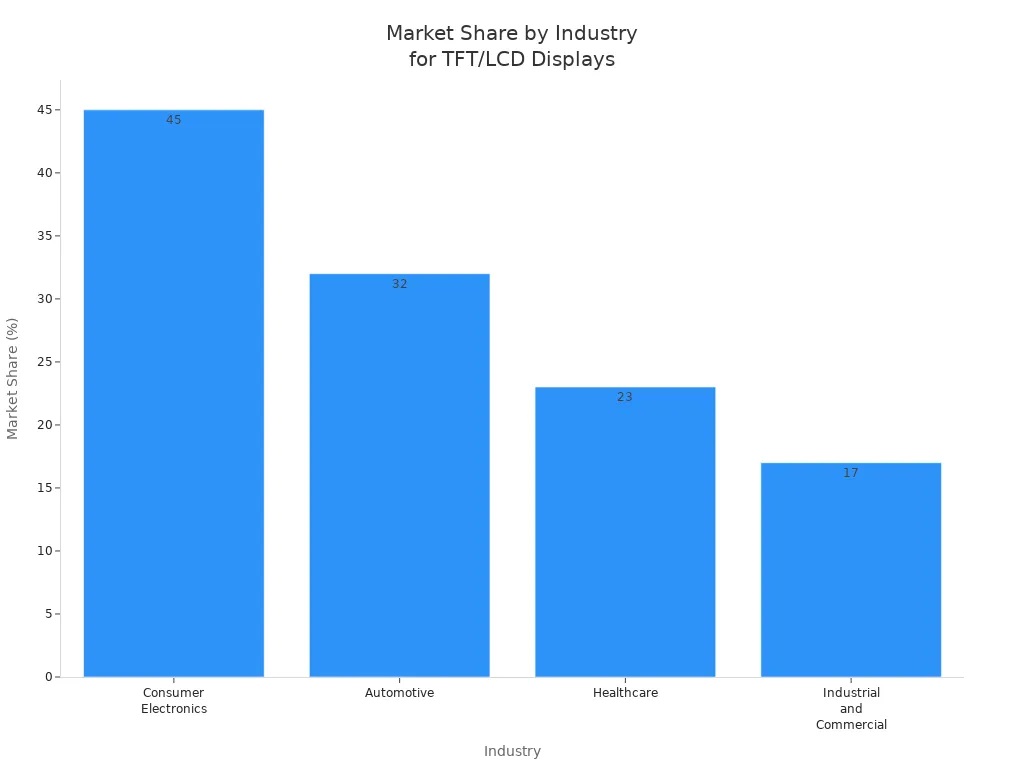
You may wonder if TFT better suits your needs than LCD. TFT LCD screens deliver sharper images and vibrant colors, making them ideal for high-performance tasks. You find TFT LCD displays in consumer electronics, automotive, healthcare, and industrial devices.
TFT is a subtype of LCD, so you must compare features based on your priorities. Cost often matters most.
Cost plays a big role in your decision. TFT displays cost more than standard LCD screens because they offer better display quality and performance. LCD screens remain the most cost-effective option for basic tasks and budget devices.
Consider these factors when choosing between TFT LCD options:
-
Intended use and application requirements
-
Budget constraints
-
Power consumption needs
-
Image quality priorities
-
Environmental conditions and durability requirements
Key Takeaways
-
TFT LCD screens provide sharper images and vibrant colors, making them ideal for high-performance tasks like gaming and professional work.
-
Standard LCD screens are more cost-effective and suitable for basic tasks, making them a great choice for budget-conscious consumers.
-
Consider your intended use, budget, and power consumption needs when choosing between TFT and standard LCD displays.
-
TFT displays offer faster response times, typically under 25 milliseconds, which reduces motion blur in fast-moving images.
-
Durability and reliability differ; TFT screens last longer and perform better in harsh environments compared to standard LCDs.
TFT vs LCD
What Is LCD Display
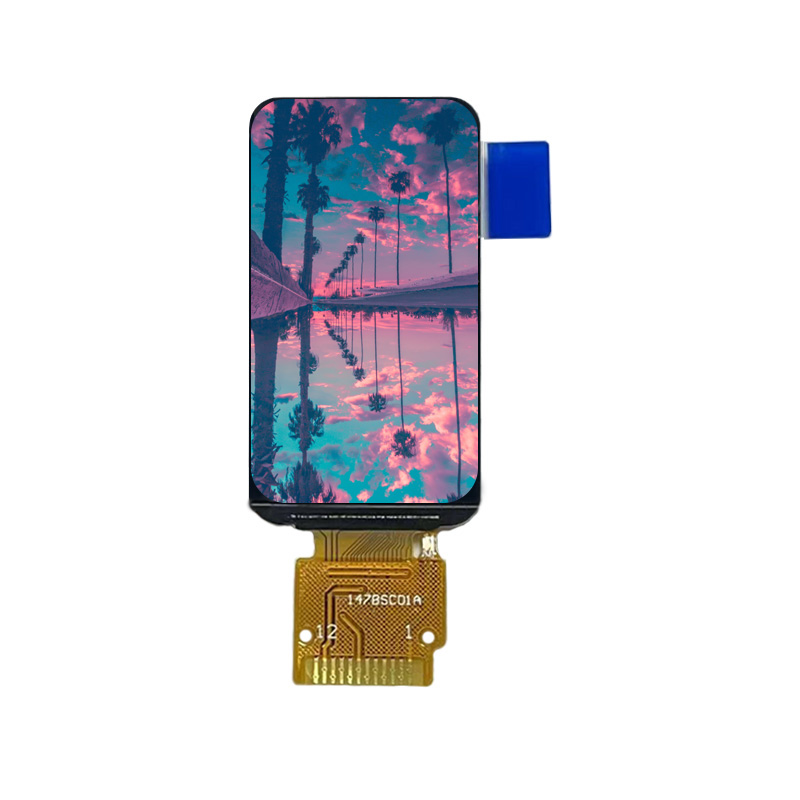
You interact with LCD display technology every day. LCD stands for Liquid Crystal Display. This technology uses liquid crystals sandwiched between two glass layers. When you apply an electric current, the crystals change their orientation. This process controls how much light passes through each pixel. LCD screens rely on a backlight to illuminate the display. You see LCD displays in calculators, digital watches, and basic handheld games. LCD screens offer thin profiles, lightweight designs, and low power consumption. You benefit from clear visibility in outdoor conditions and simple graphics.
What Is TFT Display
You encounter TFT display technology in devices that demand high performance. TFT stands for Thin-Film Transistor. TFT LCD screens use an active matrix structure. Each pixel contains three subpixels—red, green, and blue—each controlled by its own transistor. This design allows you to address every pixel individually. You gain precise control over color and brightness. TFT LCD displays deliver sharper images, vibrant colors, and faster response times. You find TFT screens in smartphones, laptops, gaming monitors, and modern TVs. The active matrix design improves image quality and speed compared to standard LCD screens.
Note: TFT is a subtype of LCD. When you compare tft vs lcd, you actually compare standard LCD screens (passive matrix) with TFT LCD screens (active matrix).
Differences Between TFT and LCD
You notice several differences between tft and lcd technologies. The structure, image quality, response time, and typical use cases set them apart. The tft vs lcd debate centers on these features.
|
Feature |
LCD Display |
TFT Display |
|---|---|---|
|
Pixel Control |
Uses passive matrix, slower and less precise |
Uses active matrix, faster and more accurate |
|
Image Quality |
Adequate for basic text and simple graphics |
Superior quality with higher contrast and color |
|
Response Time |
100-300 milliseconds for pixel transitions |
Typically under 25 milliseconds |
|
Power Consumption |
Generally lower, especially in reflective modes |
Higher, but modern TFTs have improved efficiency |
|
Cost |
Lower initial costs due to simpler manufacturing |
Higher initial costs, but decreasing over time |
You see that tft lcd screens offer better pixel control. The active matrix design lets you enjoy faster and more accurate image updates. Standard LCD screens use a passive matrix, which results in slower response times and less precise images.
|
Feature |
TFT Displays |
Standard LCD Displays |
|---|---|---|
|
Contrast Ratios |
Higher contrast ratios |
Lower contrast ratios |
|
Color Vibrancy |
More vibrant colors |
Less vibrant colors |
|
Image Quality |
Better overall image quality |
Inferior image quality |
You experience richer colors and higher contrast with tft lcd screens. Standard LCD screens provide basic image quality, suitable for simple graphics and text.
|
Feature |
TFT Display |
LCD Display |
|---|---|---|
|
Color Depth |
4,096 colors (12-bit) |
16.7 million colors (24-bit) |
|
Contrast Ratio |
100:1 |
1000:1 to 3000:1 |
You notice that tft lcd screens can display a wide range of colors and achieve high contrast ratios. This makes them ideal for tasks that require accurate color reproduction.
You also observe differences in response time and refresh rate. TFT screens change images in less than 25 milliseconds. Standard LCD screens may take 100 to 300 milliseconds, resulting in blurry or ghosted moving images. You benefit from smooth action in games and videos with tft lcd screens.
-
TFT displays provide faster response times, typically between 1 to 5 milliseconds.
-
Traditional LCDs have slower response times, ranging from 100 to 300 milliseconds, leading to motion blur.
-
TFT displays are better suited for fast-moving images, such as in gaming and video playback.
You encounter tft vs lcd in many devices. TFT LCD screens appear in smartphones, tablets, laptops, gaming monitors, and modern TVs. Standard LCD screens are common in calculators, digital watches, and basic handheld games.
|
Display Type |
Typical Use Cases |
|---|---|
|
TFT |
Smartphones, Laptops, Gaming monitors, Modern TVs |
|
Standard LCD |
Calculators, Digital watches, Basic handheld games |
You see LCD displays favored in consumer electronics due to their thin and lightweight design, low power consumption, and readability in outdoor conditions. You find them in portable devices like phones, tablets, and laptops, as well as in large-format TVs and desktop monitors.
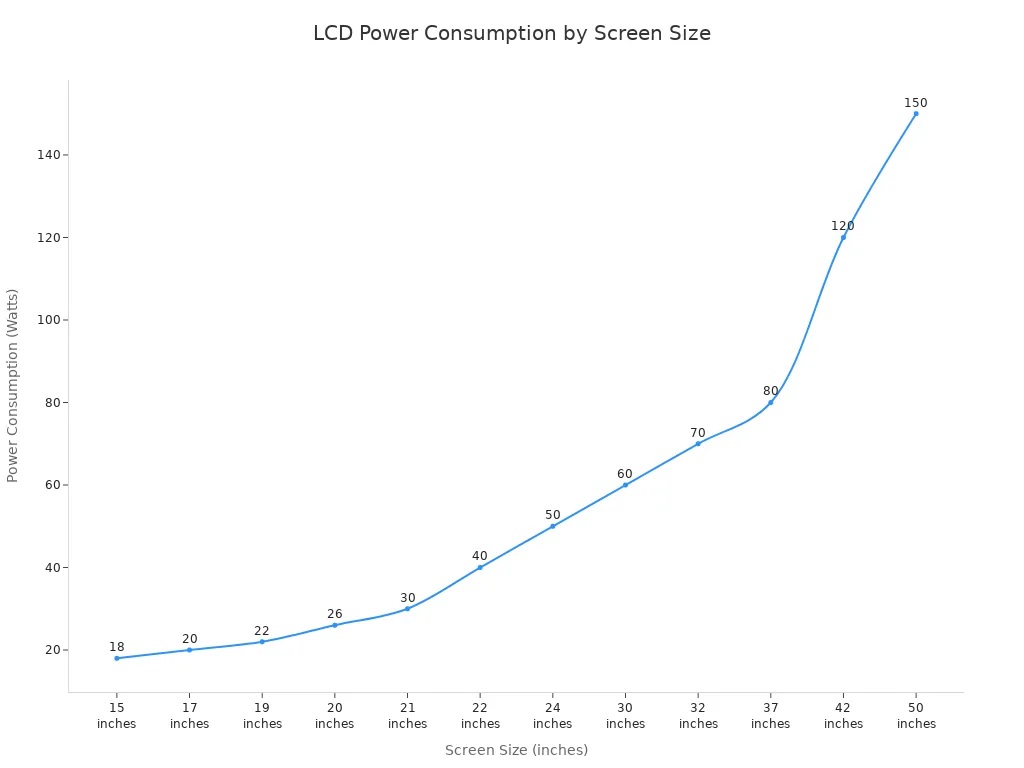
Power consumption varies with screen size. LCD screens use less power, especially in reflective modes. TFT LCD screens consume more power, but modern designs have improved efficiency.
Durability and reliability also differ. TFT LCD screens last longer and withstand harsh environments better. You rely on them for outdoor and industrial use. Standard LCD screens have shorter lifespans and may suffer from image retention.
|
Display Type |
Durability |
Reliability |
|---|---|---|
|
TFT |
More durable, longer lifespan, better environmental resilience |
Suitable for outdoor and industrial use |
|
LCD |
Shorter lifespan, susceptible to image retention |
Viable for applications with infrequent replacement |
When you compare tft vs lcd, you must consider environmental factors. TFT LCD screens operate effectively within a temperature range of -20°C to 60°C. Outside this range, you may see image retention and color distortion. LCD screens struggle in low temperatures, as liquid crystal molecules lose fluidity and response speed. Manufacturers modify materials and components to ensure LCD screens function in extreme conditions.
The tft vs lcd display comparison helps you understand which technology fits your needs. You weigh differences between tft and lcd based on structure, image quality, speed, power consumption, durability, and typical use cases.
TFT Display Features
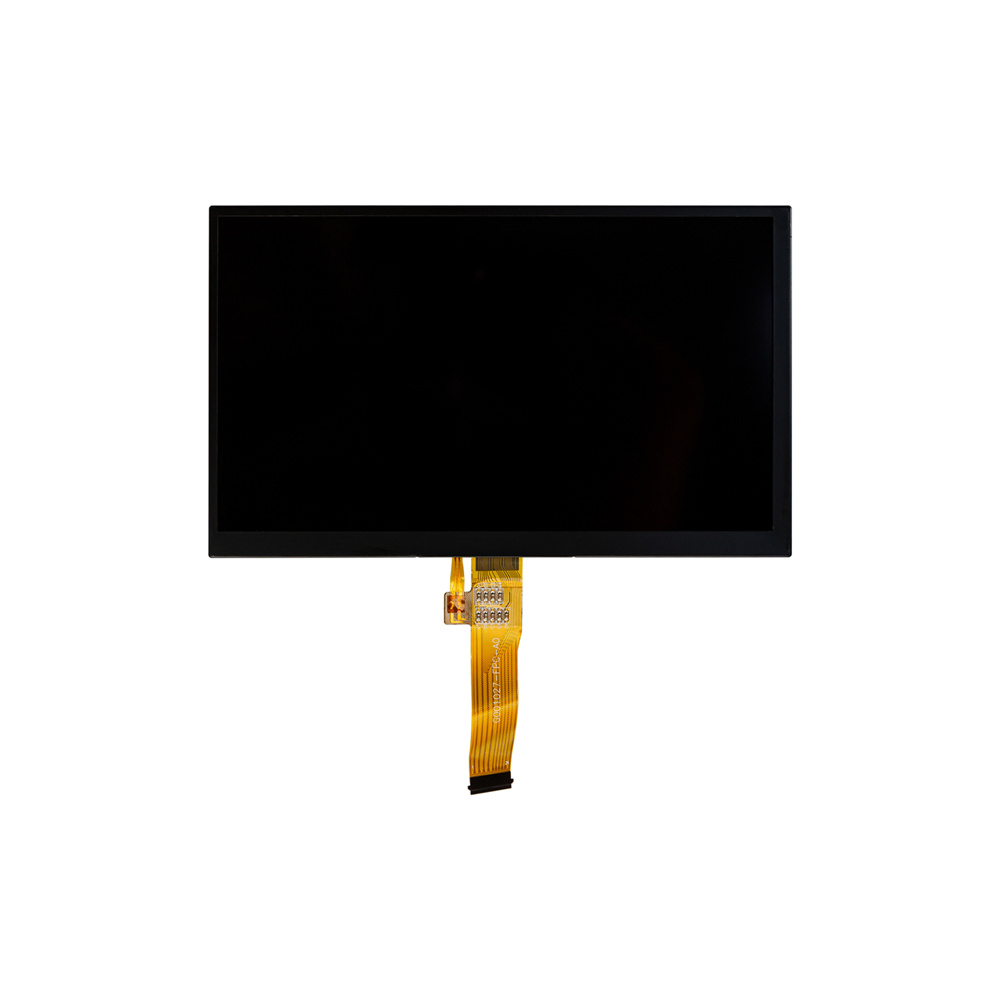
Image Quality and Color
You notice that tft lcd screens deliver superior image quality compared to standard LCDs. The thin-film transistor technology in a tft display gives you precise control over each pixel. This control leads to better overall image quality, higher contrast ratios, and vivid colors. You see accurate color reproduction and a wide color gamut, which means images look true to life. The active matrix design in tft lcd panels ensures that you experience color accuracy and image stability from different viewing angles. You benefit from minimal color distortion, even when you view the screen from the side. If you need a touch-ready display for interactive applications, tft lcd technology supports this feature without sacrificing image quality.
Refresh Rate and Response Time
You enjoy a higher refresh rate and fast response time with tft lcd screens. These displays usually change images in less than 25 milliseconds, while standard LCDs may take up to 300 milliseconds. The higher refresh rate means you see smoother motion in games and videos. You avoid motion blur and ghosting, which often occur with slower screens. For gaming or fast-paced video, tft lcd technology gives you a clear advantage. The quick response of each pixel ensures that moving images remain sharp and fluid.
-
TFT lcd screens typically have a higher refresh rate.
-
You experience smoother action and less blurring during fast movements.
Power Consumption
You may wonder about power usage in tft lcd displays. A 12.1-inch tft lcd usually consumes between 5 and 15 watts. While this is higher than some basic LCDs, modern tft lcd designs focus on low power usage. You can use these screens in portable devices without draining the battery too quickly. The balance between performance and efficiency makes tft lcd a practical choice for many applications.
Durability and Reliability
You rely on tft lcd screens for their durability and reliability. These displays often last up to 50,000 hours, with an uptime of 98.9% over five years. You see less than 1% of stuck pixels after 30,000 hours of use. The operating temperature range spans from -30°C to +85°C, so you can use tft lcd screens in harsh environments. The screens tolerate vibration and shock, making them suitable for industrial and outdoor use. You also benefit from consistent brightness and image stability over time.
|
Metric |
Value |
|---|---|
|
Average Lifespan (MTBF) |
50,000 hours |
|
Uptime over 5 years |
98.9% |
|
Brightness retention |
850cd/m² (85%) |
|
Operating temperature |
-30°C to +85°C |
|
Vibration tolerance |
5G |
|
Shock tolerance |
50G |
Tip: Choose tft lcd displays when you need long-lasting, reliable performance in demanding conditions.
LCD Display Features
Viewing Angles
You often want a screen that looks clear from any direction. Not all lcd display types perform the same way. Standard lcd display panels, like twisted nematic (TN) or tft lcd, can show color shifts or lower contrast when you view them from the side. In contrast, IPS panels, which are a type of lcd display, give you excellent viewing angles and consistent image quality. You can compare the main types in the table below:
|
Display Type |
Viewing Angle Performance |
Image Quality |
Contrast |
|---|---|---|---|
|
IPS |
Excellent |
Consistent |
High |
|
TFT |
Poor |
Variable |
Low |
If you need a screen for group viewing or public displays, you should consider IPS lcd display panels. For personal devices, tft lcd screens may be enough, but you might notice some color changes at sharp angles.
Cost and Affordability
You may look for a cost-effective solution when choosing a display. Standard lcd display panels usually cost less than tft lcd screens. Manufacturers can produce them with simpler technology, which lowers the price for you. This makes lcd display panels a cost-effective choice for many projects. The table below shows how costs compare:
|
Display Type |
Cost Characteristics |
|---|---|
|
TFT |
Generally more expensive due to advanced technology and superior performance. |
|
Standard LCD |
More affordable, suitable for applications where high-end image quality is not essential. |
You save money with standard lcd display panels, especially when you do not need the advanced features of tft lcd screens. Many schools, offices, and factories choose lcd display panels because they are cost-effective and reliable.
Typical Applications
You find lcd display technology in many industries. These screens work well in environments where durability and cost-effective operation matter. You see lcd display panels in factory automation, food and beverage processing, and transportation. They also appear in healthcare equipment and outdoor signage. The table below highlights common uses:
|
Industry |
Application Description |
|---|---|
|
Factory Automation |
Used for human-machine interface (HMI) on production lines. |
|
Food and Beverage |
IP-rated displays that can withstand cleaning and sanitization. |
|
Chemical and Pharmaceutical |
Displays that resist harsh chemicals and disinfectants. |
|
Transportation |
Mounted in vehicles requiring shock and vibration resistance. |
|
Healthcare |
Incorporated in medical equipment demanding high reliability. |
|
Outdoor Signage |
High-brightness screens that offer sunlight readability. |
You rely on lcd display panels for cost-effective performance in both commercial and industrial settings. While tft lcd screens offer better image quality, standard lcd display panels remain the most cost-effective choice for many everyday applications.
TFT Better? Pros and Cons
TFT Display Pros
You gain several advantages when you choose a TFT LCD display. Many users ask, "Is tft better for my needs?" The answer often depends on your priorities, but you will notice that tft lcd screens offer features that make them stand out in many applications.
|
Advantage |
Description |
|---|---|
|
Budget-friendly |
You can find tft lcd screens at reasonable prices for many devices. |
|
Long-lasting operation |
You benefit from reliable performance and extended lifespan. |
|
Steady performance |
TFT lcd displays maintain consistent quality, even during long-term use. |
|
Superior outdoor visibility |
You see the screen clearly, even in bright sunlight, which is ideal outdoors. |
|
Color accuracy |
You experience precise color reproduction, important for design and medical use. |
|
Superior image quality |
You enjoy sharper images and better overall image quality for videos and games. |
|
Higher contrast ratios |
You notice deeper blacks and brighter whites, making visuals more vivid. |
Tip: If you need a display for outdoor use or require color precision, tft better meets your expectations.
You also find that tft lcd vs amoled comparisons often highlight the durability and steady performance of tft lcd screens, especially in static display conditions.
TFT Display Cons
You should also consider the drawbacks before deciding if tft better fits your needs. Some limitations may affect your choice, especially for portable or high-end devices.
-
You may see higher power consumption with tft lcd screens, which can reduce battery life in mobile devices.
-
The cost of tft lcd displays can be higher, especially for large or advanced models.
-
You might notice limited viewing angles compared to IPS or AMOLED panels, which can cause color shifts from the side.
-
TFT lcd vs amoled comparisons often show that amoled offers deeper blacks and thinner designs.
-
You may find that tft lcd screens are less flexible in design than newer technologies.
Note: If you want the best battery life or the widest viewing angles, tft better may not always be the right answer.
LCD Display Pros
Standard LCD displays still offer many benefits, especially if you want a cost-effective solution. You may find lcd screens in entry-level monitors, kiosks, and industrial equipment.
|
Benefit |
Description |
|---|---|
|
Lower cost |
You save money because lcd screens are cheaper to produce and buy. |
|
High responsiveness (TN) |
You get fast response times, which help with fast-moving images. |
|
Strong static contrast (VA) |
You see deeper blacks in static scenes, especially with VA panels. |
|
Better baseline energy efficiency |
You use less power, which is good for basic devices and long-term use. |
|
Good durability for basic use |
You rely on lcd screens for simple, everyday applications. |
You may notice that lcd displays work well for budget projects and basic needs. If you do not need superior image quality, lcd screens provide a practical choice.
LCD Display Cons
You should be aware of the limitations of standard lcd screens. These drawbacks can affect your viewing experience and device performance.
-
You may see limited viewing angles, which cause color and brightness distortion when viewed from the side.
-
Uneven backlighting can lead to brightness distortion across the screen.
-
LCD screens cannot achieve deep black levels because liquid crystals do not fully block the backlight.
-
You may experience motion blur due to slow response times, especially in older passive-matrix lcds.
-
Some lcd screens use pulse-width modulation (PWM) for dimming, which can cause eye strain during long use.
|
Parameter |
Old Passive-Matrix LCD |
Modern TFT LCD (Basic TN Type) |
|---|---|---|
|
Response Time |
200 - 500 ms |
1 - 5 ms |
|
Viewing Angle |
< 30 degrees |
Up to 170 degrees (IPS/VA) |
|
Color Depth |
256 - 4,096 colors |
16.7 million colors |
|
Contrast Ratio |
50:1 to 100:1 |
1000:1 to 3000:1 |
You may find that tft better suits your needs if you want faster response times and better overall image quality. However, if you only need a simple, affordable display, standard lcd screens remain a solid choice.
Remember: Always match your display choice to your specific needs. Ask yourself if tft better fits your priorities for image quality, speed, power, and durability.
Choosing Between TFT and LCD
Factors to Consider
When you choose between tft lcd and standard LCD displays, you need to weigh several important factors. Your decision depends on how you plan to use the screen, your budget, and the level of performance you expect.
-
Application Scenario: Think about where and how you will use the display. For gaming, you want fast response times. For professional work, you need accurate colors. For outdoor or industrial use, durability matters most.
-
Budget: If you have a tight budget, standard LCD screens may fit your needs. If you can spend more for better performance, tft lcd displays offer advanced features.
-
Performance Requirements: Consider what matters most to you—image quality, speed, or power efficiency. A tft lcd display gives you sharper images and vibrant colors, while a standard LCD may save energy.
-
Wide Compatibility: Some devices require displays that work with many systems. You should check if your chosen screen supports wide compatibility with your hardware.
Tip: Always match your display choice to your main priorities. A tft lcd display works best for high-speed and high-quality visuals, while a standard LCD suits basic tasks.
You should choose your display technology based on your needs. TFT LCDs give you sharper images and faster response times, while standard LCDs offer affordability and good brightness. Use the table below to compare strengths and weaknesses:
|
Display Technology |
Strengths |
Weaknesses |
|---|---|---|
|
TFT LCD |
Sharp images, fast response |
Higher cost, more power use |
|
LCD |
Affordable, bright |
Lower contrast, less color depth |
Think about factors like display size, resolution, temperature range, and power consumption. Your priorities—image quality, speed, cost, and durability—will guide your best choice.
FAQ
What is the main difference between TFT and standard LCD displays?
You see the main difference in how each pixel is controlled. TFT uses an active matrix with transistors for each pixel. Standard LCD uses a passive matrix, which results in slower response and lower image quality.
Can you use TFT displays outdoors?
Yes, you can use TFT displays outdoors. Many models offer high brightness and anti-glare coatings. You get clear visibility even in sunlight, which makes them ideal for outdoor kiosks and industrial equipment.
Do TFT screens consume more power than LCD screens?
You usually notice higher power consumption with TFT screens. The active matrix design needs more energy to control each pixel. Modern TFTs have improved efficiency, but standard LCDs still use less power overall.
Which display type is better for gaming?
You get better performance for gaming with TFT displays. They offer faster response times and smoother motion. You avoid motion blur, which is common with standard LCD screens.
Are TFT displays more expensive than LCD displays?
Yes, you often pay more for TFT displays. The advanced technology and better image quality increase the cost. Standard LCD screens remain the budget-friendly option for basic needs.
 Network Supported