

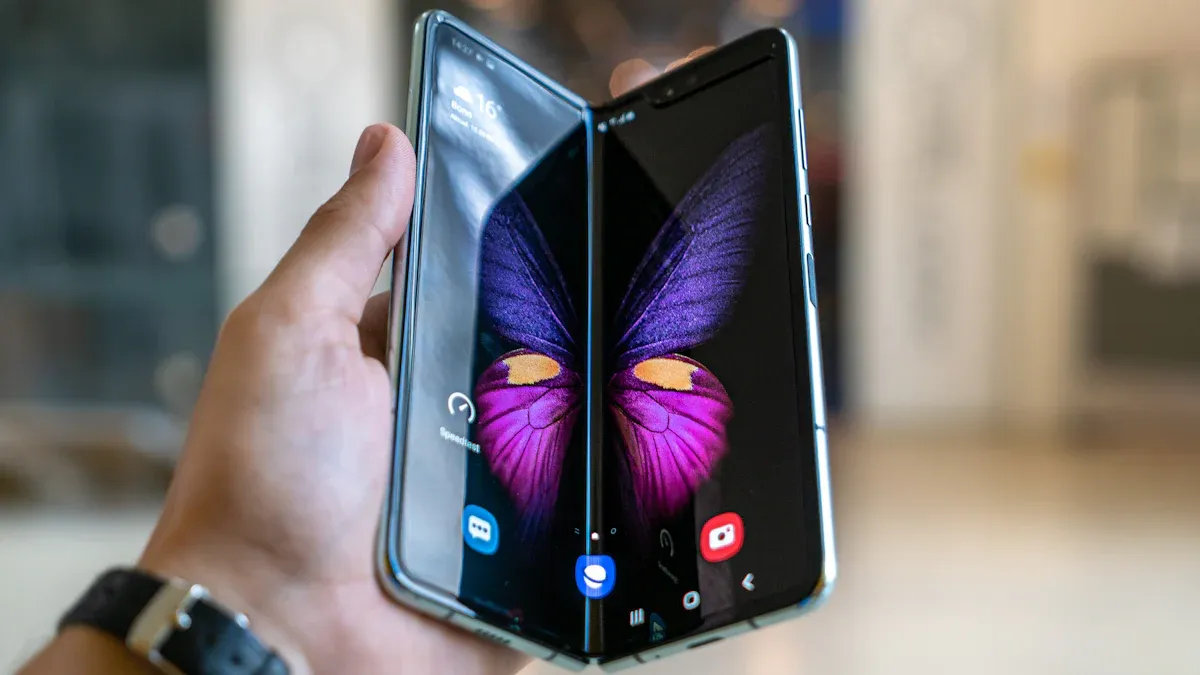
You see OLED Display technology everywhere in 2026. Smartphones, TVs, laptops, tablets, wearables, monitors, automotive displays, gaming devices, and other electronics all feature brilliant OLED screens. Flexible OLED panels drive innovation in foldable and curved devices. LG and Samsung supply most panels. AI TVs and professional monitors showcase the latest advancements.
Explore the device categories below for a quick overview:
|
Device Category |
Example Features |
|---|---|
|
Smartphones |
Flagship, foldable, curved |
|
Televisions |
AI TVs, brightness boosters |
|
Laptops & Tablets |
High color accuracy |
|
Wearables |
Smartwatches, fitness trackers |
|
Monitors |
Gaming, professional use |
|
Automotive Displays |
Cockpit, infotainment |
|
Gaming Devices |
Portable consoles, VR headsets |
|
Other Electronics |
Cameras, smart home devices |
Key Takeaways
-
OLED screens deliver deeper blacks, vibrant colors, and better contrast across all devices. They improve visual quality and energy efficiency.
-
Flexible OLED panels drive innovation in foldable, curved, and lightweight devices. Expect more durable, stylish, and portable electronics.
-
In 2026, OLED technology powers smartphones, tablets, TVs, monitors, wearables, and automotive displays. It enhances user experience in many categories.
-
Gaming and professional monitors with OLED panels offer faster response times, higher refresh rates, and superior color accuracy. They boost performance and creativity.
-
Ongoing advancements in OLED materials and AI integration make screens brighter, more durable, and more affordable. Expect even more device categories to adopt OLED technology.
Smartphones and Tablets
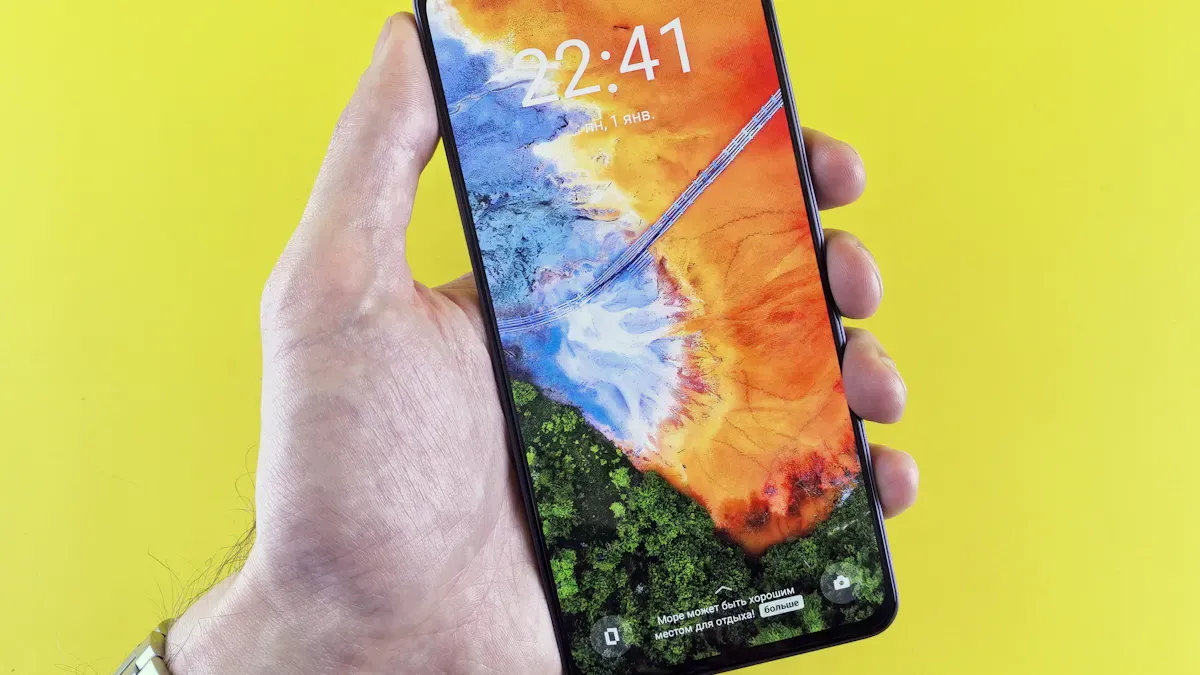
Flagship Smartphones with OLED Display
You experience the best visuals on flagship smartphones that use OLED Display technology. Leading brands push the boundaries of clarity and color.
-
Xiaomi launched a smartphone in October 2025 with an S-stripe OLED Display. This model features 9.38 million subpixels, delivering exceptional visual clarity and color precision.
-
Samsung introduced the Galaxy S25 FE in July 2025. This device uses a flexible OLED Display, offering improved durability and vibrant visuals.
You notice that flagship smartphones now prioritize OLED Display panels for their superior brightness, contrast, and energy efficiency.
Mid-Range Smartphones Using OLED
You find OLED Display panels in many mid-range smartphones. Manufacturers recognize the demand for high-quality screens in affordable devices.
-
Mid-range models from brands like OnePlus, Realme, and Motorola now feature OLED Display technology.
-
You benefit from deeper blacks, vivid colors, and smoother touch response, even in devices that cost less than premium models.
Foldable and Curved Devices
Flexible OLED Display panels drive innovation in foldable and curved smartphones. You see rapid adoption in this segment.
-
The U.S. market for flexible OLED touch screens reached USD 4.1 Billion in 2024.
-
Projected growth shows USD 4.5 Billion in 2025 and USD 11.2 Billion by 2033, with a compound annual growth rate of 11.4% from 2026 to 2033.
-
Foldable smartphones, automotive infotainment systems, and wearable health devices fuel this expansion.
-
You demand lightweight, durable, and high-resolution displays in premium consumer electronics.
Flexible OLED Market Growth (2024-2033):
|
Year |
Market Value (USD Billion) |
|---|---|
|
2024 |
4.1 |
|
2025 |
4.5 |
|
2026 |
5.0* |
|
2033 |
11.2 |
*Estimated value for 2026
Tablets with OLED Display
You see OLED Display panels becoming standard in tablets. The market shifts toward this technology due to its advantages.
-
OLED tablet shipments are projected to increase by 39% year-on-year in 2026, reaching 15 million units.
-
LCD tablet shipments remain stable, showing no significant growth.
-
Most new demand in the tablet market comes from OLED Display technology.
Tablet Market Share in 2026:
|
Display Type |
Shipments (Million Units) |
Growth Rate |
|---|---|---|
|
OLED |
15 |
+39% |
|
LCD |
Stable |
0% |
|
Mini-LED |
Limited |
Low |
You benefit from higher color accuracy, better contrast, and improved battery life in tablets with OLED Display panels.
Televisions and Monitors
OLED TVs
You see OLED TVs leading the premium television market in 2026. Brands like Samsung and LG set the standard for picture quality and innovation. Samsung’s AI OLED TVs use advanced processors to optimize image clarity, upscaling, and color accuracy in real time. LG’s G6 and C6 models introduce Tandem 2.0 brightness booster technology, which delivers higher peak brightness and improved energy efficiency. You notice that these advancements make OLED TVs ideal for both bright living rooms and dedicated home theaters.
OLED TVs provide perfect black levels, infinite contrast, and wide viewing angles. You experience movies and sports with lifelike detail and vibrant colors, even in challenging lighting conditions.
You benefit from a growing range of screen sizes, from compact 42-inch models to cinematic 97-inch displays. Manufacturers focus on ultra-thin designs and minimal bezels, making OLED TVs a centerpiece in modern interiors. You also find that smart features, such as voice assistants and seamless streaming integration, come standard in most OLED TV lineups.
OLED Gaming Monitors
You demand fast response times and immersive visuals for gaming. OLED gaming monitors deliver on both fronts. In 2026, you see a surge in adoption of QD-OLED and WOLED panels, which combine high refresh rates with exceptional color performance.
Top OLED Gaming Monitors in 2026
|
Model Name |
Panel Type |
Size |
Refresh Rate |
Resolution |
Price |
|---|---|---|---|---|---|
|
Dell Alienware AW2726DM |
QD-OLED |
26.5" |
240Hz |
2560x1440 |
$349.99 |
|
Sony Inzone M10S II |
WOLED |
26.5" |
540Hz |
2560x1440 |
$1,099 |
|
Dell UltraSharp U3226Q |
QD-OLED |
31.5" |
120Hz |
3840x2160 |
$2,599 |
|
MSI MPG 322UR / MAG 321UP |
QD-OLED |
32" |
N/A |
N/A |
N/A |
|
LG 32GX870B |
WOLED |
32" |
480Hz |
3840x2160 |
N/A |
You notice that QD-OLED panels offer deeper blacks and more vibrant colors compared to traditional LCDs. Dual-layer OLED technology further enhances contrast and reduces motion blur, giving you a competitive edge in fast-paced games.
Gaming Monitor Market Share in 2026
|
Monitor Type |
Market Share in 2026 |
|---|---|
|
OLED Gaming Monitors |
26% |
|
Traditional LCD Monitors |
48% |
You see OLED gaming monitors capturing a significant share of the market, driven by their superior image quality and performance.
Professional Monitors with OLED Display
You require precise color accuracy and deep blacks for creative work. Professional monitors with OLED Display technology meet these demands. Leading brands like LG, Philips, and Samsung offer models tailored for graphic design, video editing, and color grading.
Professional OLED Monitors in 2026
|
Brand |
Model |
Display Type |
Size |
Resolution |
Refresh Rate |
Color Gamut |
Certification |
Ports |
|---|---|---|---|---|---|---|---|---|
|
LG |
39GX950B |
OLED Curved |
39" |
5K2K (5120x2160) |
165Hz (330Hz at 2560x1080) |
99.5% DCI-P3 |
VESA DisplayHDR 500 True Black |
DisplayPort 2.1, 2 HDMI 2.1, USB C |
|
Philips |
Evnia 27M2N6501L |
QD-OLED |
26.5" |
2560x1440 |
240Hz |
N/A |
N/A |
Dual HDMI 2.1, DisplayPort 1.4 |
|
Samsung |
Odyssey OLED G8 |
QD-OLED |
31.5" |
4K |
240Hz |
N/A |
VESA DisplayHDR True Black 500 |
DisplayPort 2.1 |
OLED monitors provide self-emissive pixels that achieve true black levels, which eliminates the visible halos and blooming effects that are often present in LCD and mini-LED displays. They meet VESA DisplayHDR True Black standards, offering black levels that are significantly deeper than those of standard LCD HDR. Additionally, OLED panels have a rapid response time of 0.03 ms, which helps to eliminate ghosting and inverse artifacts, resulting in clearer images of fast-moving objects. This technology also avoids blooming and halo effects, ensuring perfect separation of bright objects against dark backgrounds, which is crucial for creative professionals who require visual precision.
You gain access to features like wide color gamuts, high refresh rates, and advanced certifications. These monitors support demanding workflows and ensure your creative output matches your vision.
Laptops, Wearables, and Automotive
Laptops with OLED Display
You see a new wave of laptops in 2026 that feature OLED Display panels. These laptops deliver vibrant colors, deep blacks, and high contrast, making them ideal for both creative professionals and gamers. Manufacturers focus on innovation and flexibility. For example, the Lenovo 2026 Legion Pro Rollable stands out as a concept gaming laptop. This device uses a rollable OLED screen that expands from 16 inches to 24 inches in ultra-wide mode. You experience seamless transitions between work and play, thanks to the adaptable display.
You notice that OLED laptops offer thinner profiles, lighter weight, and longer battery life compared to traditional LCD models.
2026 OLED Laptop Innovations
|
Model |
Display Type |
Unique Feature |
|---|---|---|
|
Lenovo Legion Pro Rollable |
OLED |
Rollable, 16"-24" |
|
Dell XPS 15 (2026) |
OLED |
Ultra-thin, 4K panel |
|
ASUS ZenBook Flip 14 (2026) |
OLED |
2-in-1 convertible |
Wearables with OLED Display
You rely on wearables for health tracking, notifications, and convenience. In 2026, most smartwatches and fitness trackers use flexible OLED screens. These displays curve around your wrist, providing a comfortable fit and clear visuals in any lighting. Brands like Samsung, Apple, and Garmin lead the market with advanced models. You benefit from always-on displays, vibrant colors, and improved battery efficiency.
-
Smartwatches: Samsung Galaxy Watch, Apple Watch Series 10
-
Fitness Trackers: Garmin Vivosmart, Fitbit Charge 7
Flexible OLED technology enables new form factors, such as wraparound bands and ultra-thin designs.
Automotive OLED Displays
You see OLED screens transforming automotive interiors. Modern vehicles use OLED panels for digital cockpits, infotainment systems, and rear-seat entertainment. Flexible OLED displays allow for curved dashboards and seamless integration with vehicle controls. Leading automakers like Mercedes-Benz and BMW equip their flagship models with panoramic OLED instrument clusters and center consoles.
Automotive OLED Adoption in 2026
|
Application |
Example Brand |
Display Feature |
|---|---|---|
|
Digital Cockpit |
Mercedes-Benz EQS |
Curved OLED cluster |
|
Infotainment System |
BMW i7 |
Panoramic OLED screen |
|
Rear Entertainment |
Audi e-tron GT |
Flexible OLED panels |
You experience intuitive touch controls, crisp graphics, and enhanced safety through real-time information displays.
Emerging Devices and Trends
Other Electronics with OLED Display
You see OLED Display technology expanding into a wide range of electronics beyond mainstream devices. Cameras now feature OLED viewfinders and rear screens, giving you sharper previews and more accurate color representation. Smart home devices, such as thermostats and smart speakers, use compact OLED panels for intuitive touch controls and vibrant status displays. VR headsets benefit from OLED’s fast response times and deep blacks, which reduce motion blur and enhance immersion during gameplay or virtual meetings.
You notice that OLED adoption in these categories continues to grow, driven by the demand for premium visuals and flexible form factors.
OLED Device Adoption by Category (2026)
-
Cameras: OLED viewfinders and screens improve clarity.
-
Smart Home Devices: OLED panels enable sleek, interactive interfaces.
-
VR Headsets: OLED displays deliver lifelike visuals and low latency.
OLED Technology Trends
You benefit from rapid innovation in OLED technology throughout 2026. Manufacturers introduce new features that enhance your viewing experience and device performance.
|
Innovation |
Description |
|---|---|
|
Hyper Radiant Color Technology |
Enhances color accuracy and delivers images up to 3.9 times brighter than conventional OLEDs. |
|
α (Alpha) 11 AI Processor Gen 3 |
Features an enhanced NPU and Dual AI Engine for improved processing and AI capabilities. |
|
Reflection Free Premium certification |
Industry-first certification improving glare-free viewing and reflection handling. |
|
Gaming Support |
All models support HDMI 2.1, VRR, and low input lag for enhanced gaming experiences. |
|
AI Enhancements |
Includes content recognition, motion and tone mapping improvements, and personalized recommendations. |
You see LG and Samsung leading the charge in OLED panel supply and innovation:
-
Samsung expands its OLED TV lineup, moving from a premium-only approach to a broader upper-tier strategy. The company introduces Micro RGB as an ultra-premium category, pushing the boundaries of OLED performance.
-
LG Display increases production to meet rising demand for automotive and IT OLED products. Strategic partnerships help LG stabilize revenue and diversify beyond traditional TV panels.
You can expect OLED technology to reach even more device categories as these industry leaders continue to invest in research and development.
You now see OLED screens powering nearly every major device category in 2026. Flexible panels and AI enhancements drive new possibilities, making displays more durable, energy-efficient, and cost-effective. LG and Samsung continue to shape industry trends as leading manufacturers, while competition intensifies with new players. You can expect OLED technology to expand into even more devices, including AR, VR, and next-generation wearables, thanks to ongoing advancements in materials and design.
-
Flexible OLED panels offer improved durability and energy efficiency.
-
AI integration streamlines manufacturing and enables smarter displays.
-
New categories like AR, VR, and rollable devices are on the horizon.
OLED innovation ensures you experience brighter, lighter, and more immersive screens across all your favorite electronics.
FAQ
What are the main benefits of OLED screens?
You enjoy deeper blacks, vibrant colors, and faster response times with OLED screens. OLED panels also offer thinner designs and improved energy efficiency compared to traditional LCDs.
Do OLED screens suffer from burn-in?
You may notice image retention or burn-in if you display static images for long periods. Modern OLED devices use pixel-shifting and screen savers to reduce this risk.
Are OLED screens more expensive than LCDs?
You often pay a premium for OLED screens due to advanced manufacturing and superior image quality. Prices continue to decrease as production scales up.
Can you use OLED screens outdoors?
You can use OLED screens outdoors. Many devices now feature higher brightness and anti-reflective coatings, which improve visibility in sunlight.
Which brands lead in OLED technology?
You see LG and Samsung as leaders in OLED panel manufacturing. These companies supply panels for smartphones, TVs, monitors, and automotive displays worldwide.
 Network Supported