

A TFT display module must clear five test areas before mass production: hardware configuration, image quality and appearance, functional and mechanical behavior, environmental reliability, and documentation. Defects missed at this stage become costly field failures and returns. Goldenvision applies these checks across its module range, including the LCD 3.5 inch 320x240 TFT Display Module and the 1.5 Inch 480*240 TFT LCD Display Module. This guide covers each test, how to perform it, and the criteria used for approval.
Key Takeaways
-
Test hardware configuration first to confirm electrical compatibility and prevent damage.
-
Check image quality and appearance under controlled lighting to catch defects early.
-
Verify functional and mechanical behavior through repeated power cycles and connector checks.
-
Run environmental reliability tests like temperature, humidity, and vibration to ensure durability.
-
Document all test results and require sign-off on all five categories before mass production.
TFT Display Module Hardware Configuration
Interface and Signal Checks
Hardware verification starts with the datasheet. Goldenvision checks electrical compatibility and pin definitions against the published specification for every module, including small panels like the 1.5 Inch 480*240 TFT LCD Display Module. Engineers confirm pin assignments, logic levels, and connector orientation before any board connects to the panel. A swapped pin or an inverted logic level can destroy a sample during the first power-up.
The interface type sets the rest of the test plan. An SPI panel needs clock polarity and phase settings confirmed. An RGB panel needs timing parameters checked against the rated pixel clock, horizontal and vertical sync widths, and blanking intervals. An MCU interface needs read and write strobe timing verified. Testers compare measured waveforms with the datasheet limits and record any margin. A TFT display module that runs at the edge of its timing window may pass on the bench and fail in a finished product.
Power and Backlight
Power testing covers the logic supply and the backlight circuit separately. Technicians ramp the supply across the rated range and watch for unstable startup, excessive current draw, or brownout behavior. The backlight driver receives the same treatment. Forward current and forward voltage must stay within rated limits at every brightness setting, and the boost circuit must hold regulation without overheating.
Goldenvision repeats these checks on larger panels such as the LCD 3.5 inch 320x240 TFT Display Module, where backlight current is higher and thermal behavior matters more. Testers log current and voltage at several brightness levels, then compare the results with the driver ratings. Any reading outside the rated window returns the module to design review before production begins.
Image Quality and Appearance
Color, Brightness, and Uniformity
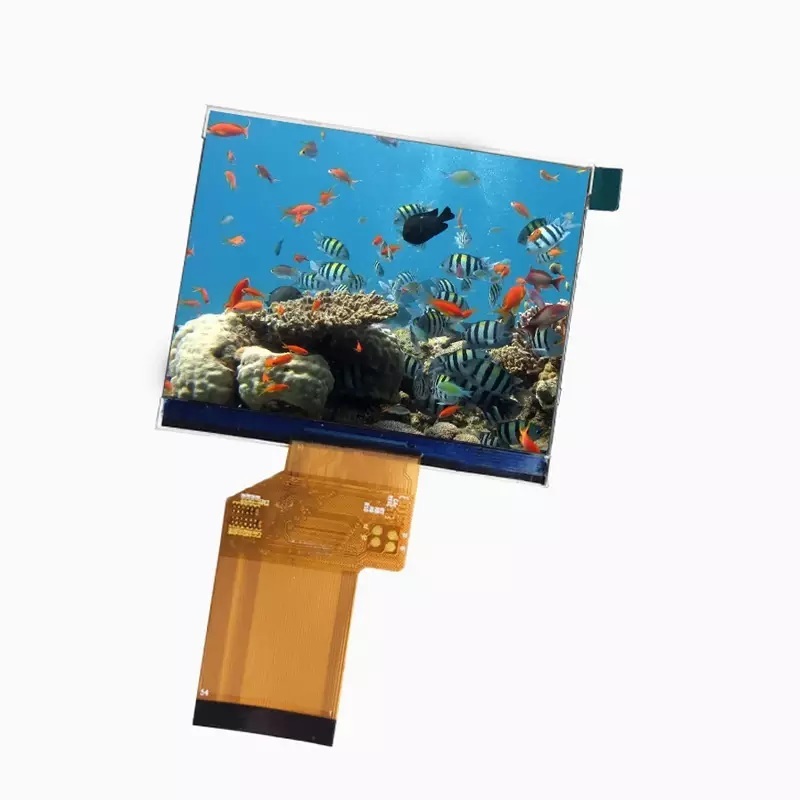
Optical testing begins with the panel powered at its rated settings and warmed to a stable state. Goldenvision measures brightness at the center and at several points across the active area, then compares the readings to judge uniformity. A bright center with dim corners signals a backlight or light-guide problem, and that panel does not move forward.
Color accuracy receives the same scrutiny. Testers display known reference patterns and check that white stays neutral and that red, green, and blue render close to their targets. Contrast ratio is measured with full-white and full-black frames, and the result is compared with the datasheet value. Viewing angle testing rotates the panel and records where brightness and color shift beyond acceptable limits. The LCD 3.5 inch 320x240 TFT Display Module serves as a working example here, since its 320x240 resolution makes pixel-level color and geometry checks straightforward to observe.
Resolution verification confirms that the panel addresses every pixel correctly. Testers load fine line patterns and gradient ramps, then look for missing rows, merged columns, or scaling artifacts. A TFT display module that shows correct geometry at native resolution passes this step.
Defects and Visual Inspection
Appearance testing is an initial inspection, and it runs under controlled conditions. Inspectors place the module under two 20W fluorescent lamps at a defined distance and angle, following a written inspection procedure. The procedure sets the viewing distance, the inspection time per unit, and the sampling plan drawn from the production lot. Consistent conditions matter, because a defect visible under one lamp may disappear under another.
Inspectors then scan for the standard defect classes. Dead pixels stay dark or bright regardless of image content. Line defects appear as vertical or horizontal stripes that do not clear when the pattern changes. Bright and dark spots, scratches, and foreign particles inside the module also count against the panel. Each defect class has an acceptance limit in the inspection standard, and inspectors compare the count against that limit rather than judging by eye alone.
Goldenvision records every inspection result against the lot number. Panels that exceed the defect limit go to a disposition review, where engineers decide between rework and rejection. This record also feeds back into process control, so a recurring defect pattern triggers a line adjustment before the next batch runs.
Functional and Mechanical Tests
Startup, Shutdown, and Stability
Functional testing begins with power sequencing. Technicians apply power, confirm the initialization sequence completes, and check that the first frame appears without flicker, roll, or a blank delay. They then remove power and repeat the cycle many times, watching for modules that fail to initialize or that show a shifted image after restart. A panel that boots reliably once but stumbles on the tenth attempt carries a latent defect.
Stability testing extends this pattern. Testers run the module through repeated power cycles and sustained operation, then compare the display against a reference image. Goldenvision logs any drift in brightness, color, or timing, and it flags intermittent faults for review. A TFT display module that resets cleanly every time and holds a stable image passes this stage.
Dimensions, Connectors, and Touch
Mechanical checks confirm that the module fits its intended enclosure. Technicians measure overall dimensions, mounting hole positions, and active area placement against the drawing. They also inspect the FPC for creases, delamination, and solder joint integrity, then mate and unmate each connector to verify retention force and contact reliability. A loose connector becomes an intermittent fault in the field.
Touch testing applies to modules that include a touch panel. Testers tap, swipe, and drag across the full surface, including the corners and edges, and confirm that every region registers input. They check linearity by tracing known paths and comparing the reported coordinates with the expected ones. Goldenvision performs these checks on panels such as the LCD 3.5 inch 320x240 TFT Display Module and the 1.5 Inch 480*240 TFT LCD Display Module, where connector spacing and FPC routing demand careful handling.
Environmental and Reliability Tests
Temperature, Humidity, and Aging
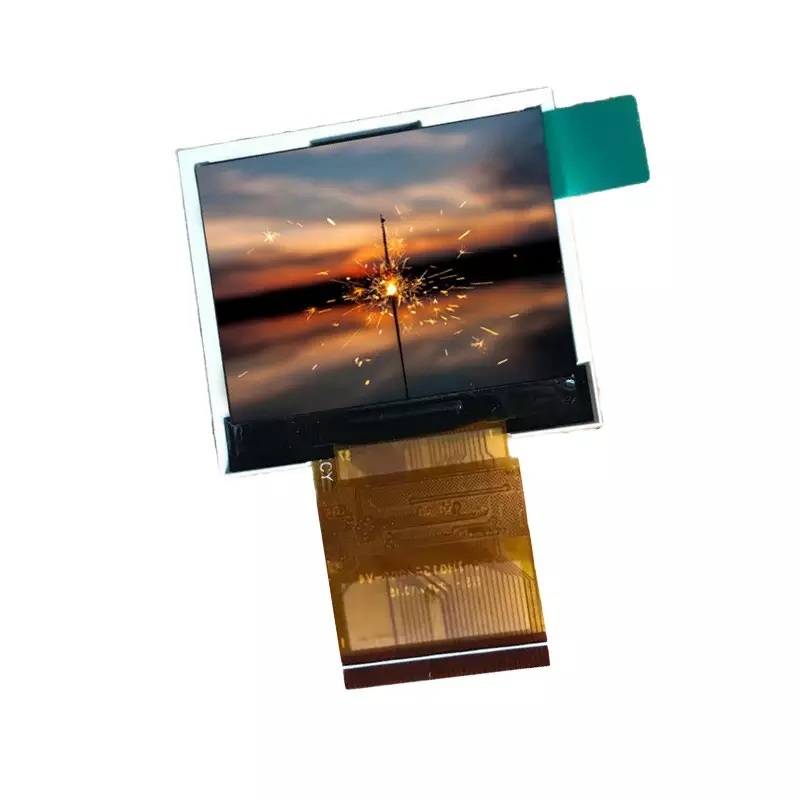
Goldenvision runs three standard pre-production steps before any lot moves toward release. The first is constant temperature and humidity testing. Chambers hold each TFT display module at elevated temperature and high humidity for a defined soak period, then return it to room conditions. Technicians inspect the panel for fogging, condensation, delamination, and corrosion on the FPC and connector contacts. The second step is 72-hour power-on aging. Every unit runs continuously at rated settings for three full days, and the test catches early-life failures that a short bench check misses. The third step is ORT reliability testing, an ongoing program that pulls samples from production lots and repeats the stress checks on a fixed schedule.
The sequence follows a simple order:
-
Soak samples in the temperature and humidity chamber.
-
Run the 72-hour power-on aging cycle.
-
Pull ORT samples and repeat the stress checks.
Pass criteria come from the datasheet, not from a generic rule. A module rated for a given operating temperature range must hold its image quality and electrical behavior across that range. Testers compare brightness, contrast, and current draw before and after each stress step. Any drift beyond the rated tolerance sends the lot to engineering review.
Vibration, Drop, and Life
Environmental stress screening simulates the journey from factory to customer. Vibration testing mounts the module in its shipping configuration and shakes it across a defined frequency sweep. Technicians then repeat the optical and functional checks. A panel that develops a line defect or a loose connector after vibration fails the screen.
Drop testing follows a similar logic. Testers drop packed modules from a height tied to the shipping specification and inspect the glass, the backlight assembly, and the solder joints afterward. The LCD 3.5 inch 320x240 TFT Display Module illustrates why this matters. Its larger glass area carries more mass, so shock loads concentrate at the mounting points and the FPC bond.
Life testing runs the backlight and driver at rated conditions for an extended period and tracks brightness decay. Pass criteria tie back to the module's rated specifications, and Goldenvision documents the measured values against those limits.
A module passes reliability testing only when every measured value stays inside its rated specification after the stress ends, not just before it begins.
TFT Display Module Documentation and Approval
Test Reports and Traceability
Testing produces data, and data only protects the customer when someone records it. Goldenvision compiles a test report for each lot. The report lists every check performed, the measured values, and the pass or fail result against the datasheet limit. Engineers attach the sampling records as well, so the report shows how many units were pulled and which ones were measured.
Traceability ties each result back to a physical unit. Lot numbers, date codes, and panel serials link the report to the modules that shipped. A field return can then be matched to its test history within minutes. This record also supports the ORT program, because engineers can compare a current lot against earlier stress results and spot a drift before it becomes a trend.
Pre-Production Sign-Off
Approval is a gate, not a formality. Goldenvision requires every category to pass before a lot moves to mass production. Hardware configuration, image quality and appearance, functional and mechanical behavior, environmental reliability, and documentation each carry their own sign-off line. A single failed category stops the release.
A module earns production approval only when all five categories pass; one failure returns it to design or process review.
The return path matters as much as the gate. A hardware failure sends the design back for a schematic or layout change. A defect pattern in appearance inspection points to a process adjustment on the line. Engineers document the root cause and the corrective action, then repeat the affected test before the module re-enters sign-off. Buyers should confirm this sequence with their supplier and review the sign-off record before releasing a production order for any TFT display module.
Hardware configuration, image quality and appearance, functional and mechanical behavior, environmental reliability, and documentation together form one complete pre-production gate. Each test maps to a real-world failure mode. A skipped timing check becomes an intermittent fault in the field. A missed defect limit becomes a return. Skipping any single test shifts that risk to the customer.
Readers should treat this checklist as a repeatable process, not a one-time exercise. They should confirm every criterion with their supplier, such as Goldenvision, and review the sign-off record before releasing a production order for any TFT display module.
FAQ
Which tests matter most before a production order?
All five categories carry equal weight. Goldenvision treats hardware configuration, image quality and appearance, functional and mechanical behavior, environmental reliability, and documentation as one gate. A single failed category stops the release, so no test outranks another.
How long does the aging step take?
Goldenvision runs every unit through a 72-hour power-on aging cycle at rated settings. The three-day run catches early-life failures that a short bench check misses. Testers then repeat the optical and functional checks before the lot moves forward.
Does every module get the same inspection?
The inspection standard stays fixed, but the sampling plan scales with the lot. Inspectors work under two 20W fluorescent lamps at a defined distance and angle. Small panels such as the 1.5 Inch 480*240 TFT LCD Display Module follow the same procedure as larger ones.
What happens when a module fails a test?
A failed category returns the module to design or process review. A hardware fault sends the design back for a schematic or layout change. A recurring appearance defect triggers a line adjustment. Engineers document the root cause and repeat the affected test before sign-off.
Can buyers review the test records?
Yes. Goldenvision compiles a test report for each lot, including measured values, pass or fail results, and sampling records. Lot numbers and panel serials link every result to a physical unit. Buyers can match a field return to its test history, including results for the LCD 3.5 inch 320x240 TFT Display Module.
 Network Supported